

PRI & PRI KITA
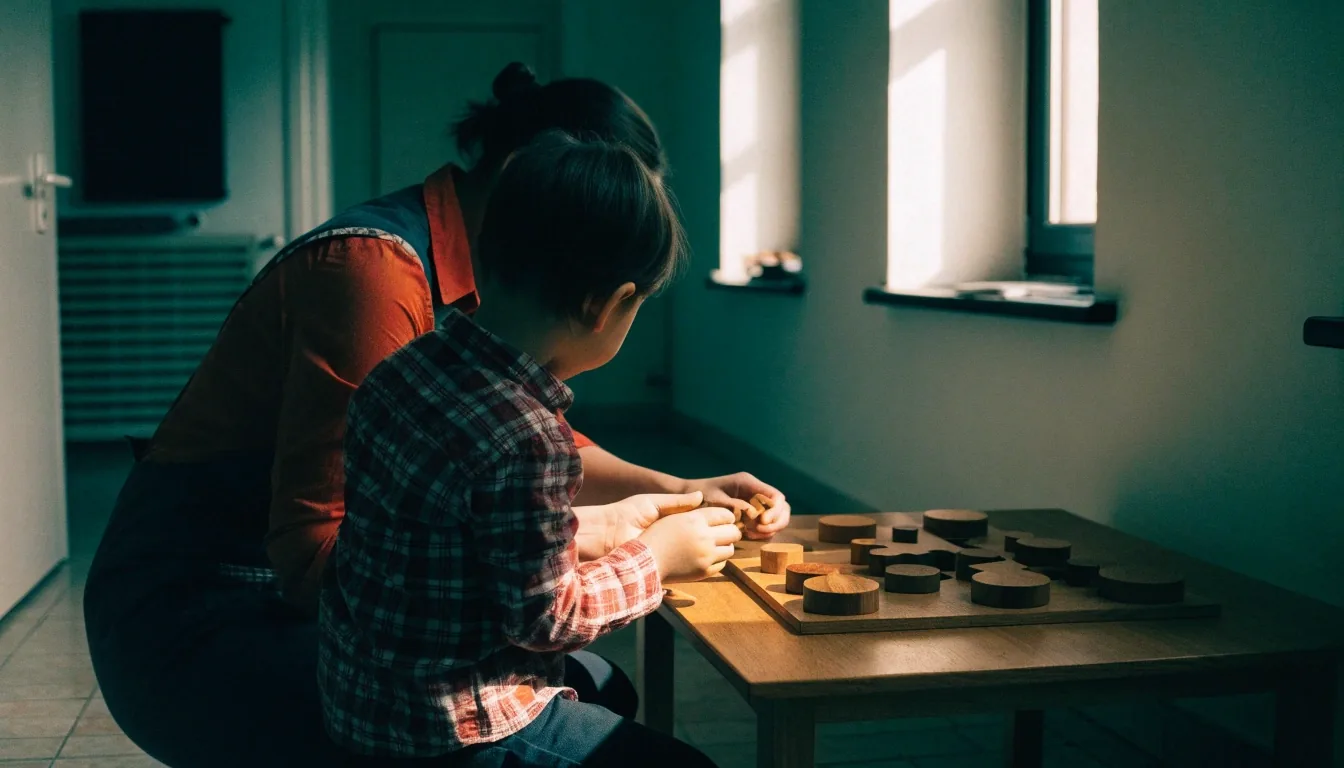
An educator crouched beside a low table arranging wooden blocks in a day-care room lit by a tall evening window

Nonprofit operator · Düsseldorf

Management and Care Services

Two connected services for day-care centres in Düsseldorf: operational management and pedagogical care. Here is what each one involves, and what it means for families, staff and partner institutions dealing with us as a Träger.

What the two services cover

Management keeps a Kita answerable and running. Care is what children and families experience every day. The two depend on each other, and a Träger holds both.

One side of the work is quiet. Both sides land in the same room.

Operational management

Staffing plans and cover, contracts and working conditions, budget and reporting, safety and premises, the ongoing relationship with the Jugendamt, and the record-keeping behind it.

Pedagogical care

Group routines, meals, rest and outdoor time, creative activities, language development, and the Eingewöhnung that settles a new child into the group.

Both services are delivered by us as the Träger. We are a gemeinnützige GmbH: a nonprofit company, which means any surplus stays in the work rather than being distributed.

Operational management of a Kita

Management is the part parents rarely see and always feel. It covers staffing plans and cover during absences, contracts and working conditions, budget and reporting, safety and premises requirements, and the ongoing relationship with the Jugendamt.

It also covers the unglamorous work: keeping records current, preparing for inspections, planning for holidays and closures. When this side is solid, the Kita runs quietly. When it is not, everyone notices within a week.

A quiet day-care centre office corner with box files, folders and a chair in late afternoon light

Staff and cover

Rosters built around the actual group, planned cover for holidays and sick leave, and onboarding so a new colleague is not dropped into a group alone.

Contracts and conditions

Employment contracts, working-time rules and the paperwork that goes with them, handled by the operator rather than left to the individual team.

Budget, safety, premises

Budget and reporting to funders, the safety checks and premises standards that keep a centre licensed, and planning for closures and holiday periods.

A day-care group room with low chairs, a block basket and a folded blanket in soft daylight

Pedagogical care and everyday practice

Care is the visible work: group routines, meals, rest, outdoor time, creative activities, language development and the Eingewöhnung of new children. It is planned, not improvised. Educators work from a weekly structure, observe children, and adjust what they offer as the group changes.

The Träger's job here is to give that work stable conditions: enough staff, sensible group sizes, and time for planning that is not squeezed out by administration.

Staffing support and continuity

Staff continuity is one of the hardest problems in German childcare, and pretending otherwise helps no one.

A Kita that loses an educator mid-year feels it in every group. Our role is to reduce how often that happens and to make the disruption smaller when it does. This is management work with a direct effect on children's daily experience.

Realistic rostering

Plans built around the group, not around an idealised week that nobody works.

Support at onboarding

New colleagues get a settled introduction to the house, the team and the group.

Clear cover expectations

Everyone knows in advance who steps in when, and what a short absence means for the day.

Cooperation with families

Families are partners in a Kita, not an audience. That means regular communication, clear information about routines and closures, honest conversations when something is difficult, and a settling-in process that includes the parent by design.

It also means being reachable. In Düsseldorf, where many parents are navigating the system for the first time, an operator that answers questions clearly saves families a great deal of avoidable stress.

A short question at the door is worth more to a family than a long search at home.
Our office practice for parent enquiries

Working with the city and the Jugendamt

A Kita in Düsseldorf operates inside a regulated system. A Träger cooperates with the bodies that run it. We report capacity, follow placement processes, and meet the staffing and premises standards that keep a centre licensed. Parents experience this as a system that works or does not; our part is to make our side of it reliable.

Jugendamt Licensing and youth welfare requirements for the centre
Kita-Navigator Place search and pre-registration for Düsseldorf families
i-Punkt Familie Advice for parents comparing options across the city
Our reporting role Capacity figures, placement follow-through, staffing and premises standards

Where a question concerns a place, the city's process leads. Where it concerns our houses, our office answers.

What we do not do

Being clear about limits is part of being a trustworthy Träger. If any of these are what you need, we would rather say so now than later.

  • We do not run a private placement service, and we cannot reserve a place outside the city's process.
  • We do not offer childcare for a fee outside the regulated Kita framework.
  • We do not promise a place at a specific centre on a specific date, because allocation depends on capacity and the city's system, not on us alone.
  • We do not take staffing enquiries through a Kita directly; partner matters go through the office so the right people are involved from the start.

Partner institutions

Working with us as an operator

If you are a school, a welfare organisation, a family centre or a municipal body working with us, this is where our role is defined. We can take on operational management of a Kita, provide staffing and care structures, and cooperate on shared projects.

Enquiries of this kind go through the office rather than through a Kita directly.

Parents

What matters most on your side

If you are a parent, the service that matters most to you is the care your child receives, and behind it the management that keeps the centre stable.

Our enrolment page explains how to approach a place. Our day-care centres page describes the houses and age groups. And if something is unclear, contact us directly: a short question is faster than a long search.

Questions we hear from families and partners

Short answers to the things people ask before they call. If yours is not here, the office is the faster route.

Who actually employs the educators in one of your Kitas?

PRI & PRI KITA does, as the Träger. Contracts, working conditions and staffing cover sit with our management, which is why a staffing gap is our problem to solve rather than the group's.

Can you find my child a place?

No, and we will not pretend otherwise. Place search and pre-registration run through the city's Kita-Navigator, and allocation depends on capacity. What we do is describe our houses honestly and answer your questions about them.

What does a Träger do that parents never see?

Budget and reporting, inspection preparation, records, contracts, premises checks, holiday and closure planning, and the relationship with the Jugendamt. None of it is visible on a normal morning, all of it shapes one.

We are an institution interested in cooperating. Where do we start?

With the office, not with a Kita. Write to us with what you have in mind and we will bring the right people into the conversation from the first reply.

More questions are collected on the FAQ page.

Office and post

PRI & PRI KITA gemeinnützige GmbH
Vagedesstraße 19
40479 Düsseldorf, Germany

Reach us

Phone 996513769
Email [email protected]

When we answer

Monday to Friday, 7:30 AM – 5:00 PM.