Answers for parents in Düsseldorf
Frequently Asked Questions
Places, costs, opening hours and how we work with the city — the questions parents bring to us most often, answered for Düsseldorf specifically.
Before you read on
Where these answers come from
These are the questions parents ask us most often about places, costs, opening hours, staffing and how we work with the city. Childcare in Düsseldorf runs through the city's own systems, so the answers below describe that process rather than ours alone. Where a rule depends on your family's situation, we say so plainly instead of guessing. If your question is not here, contact us directly and we will point you to the right person.
PRI & PRI KITA gemeinnützige GmbH manages and cares for day-care centres in Düsseldorf. We are the Träger of the centres we run, and we work inside the city's placement system rather than around it.
Places
Registration runs through the Kita-Navigator. You choose the Kitas; the system makes your interest visible to them.
Costs
From age three to school entry, fees are handled under the city's rules. Younger children follow the applicable regulations.
Daily life
Opening hours, closure days and the settling-in period are what shape your working week. Ask about all three.
Common questions
What parents ask us first
Eight questions, answered in the order they usually come up. Open a question to read the full answer.
Ask about closure days early — they shape your week more than the headline hours.
How does the Kita-Navigator work in Düsseldorf?
The Kita-Navigator is the city's official tool for finding and pre-registering childcare places. You create a profile, enter your preferences and register interest in specific Kitas. It does not assign places automatically; it makes your interest visible to the Kitas you choose. You can also ask about currently reported free places by district. Register with several Kitas rather than one — a single registration rarely leads anywhere on its own.
What is the difference between municipal, church, welfare and private Kitas?
Municipal Kitas are run by the city. Church Kitas are run by religious organisations. Welfare Kitas belong to associations such as Diakonie or AWO. Private and independent Kitas are run by other operators, including nonprofits like us. In everyday terms, the differences show up in pedagogy, opening hours, group structure and attached services rather than in the legal label alone. Visit and compare — the label tells you who runs the house, not how the day feels.
How do I know whether a Kita has places for under-3 children?
Check the Kita's listing in the Kita-Navigator for the age bands it covers, then ask the Kita directly. U3 and Ü3 places are counted separately, so a centre can have space for a three-year-old and none for a one-year-old in the same month. U3 places are generally harder to find in Düsseldorf, so plan earlier and cast a wider net than feels necessary.
What opening hours should I expect?
Full-day Kitas in Düsseldorf commonly open in the early morning and close in the late afternoon. City facilities often run from around 07:30 to 16:30 on weekdays. Independent and welfare-run houses vary around that. What matters practically is the pickup window and the closure days, so ask about both, not just the headline hours.
Opening hours differ between centres. Confirm the pickup window and the closure days with the Kita you are considering.
Which questions should I ask on a first visit?
- The age group your child would join, and how many children are in it.
- Staffing: how many adults are present, and how that changes across the day.
- The settling-in process and how long it usually takes.
- How the day is structured, and what happens when a child is unwell.
- How communication with parents works, and who to contact with a concern.
- Closure days, because they affect your working week.
How does the city handle fees for children aged three to school entry?
For children from age three to school entry, childcare fees in Düsseldorf are handled under the city's rules, with the Jugendamt as the authority. For younger children, contributions depend on the applicable regulations and your family's situation. Your Kita will explain what applies to you and which documents are needed. Bring your questions to the Kita directly — they work with these cases every week.
Does PRI & PRI KITA allocate places itself?
We are the Träger of the centres we manage, but place allocation in Düsseldorf runs through the city's Kita-Navigator and the Kitas' own offer process. We cannot reserve a place outside that system. We can answer questions about our centres and explain how the process works — and if you are unsure which step comes next, we will say so.
How do I contact PRI & PRI KITA?
Call 996513769 or email [email protected]. Our office is at Vagedesstraße 19, 40479 Düsseldorf and is open Monday to Friday, 7:30 AM – 5:00 PM. For enrolment questions, the enrolment page usually answers them faster than a call. For anything specific to your child, contact us and we will point you to the right person.
From search to first day
How placement runs in Düsseldorf
Most of the confusion parents run into is about who decides what. Here is the order in which things usually happen, and where you are the one making the choice.
-
1
Create your profile
Set up your account in the Kita-Navigator and enter your details once. You will reuse this profile for every Kita you approach.
-
2
Register interest widely
Add several Kitas, including ones slightly outside your first-choice district. U3 places in particular are limited, so a wider list helps.
-
3
Visit and ask
Book a visit where the Kita offers one. This is your chance to check group size, staffing, the settling-in process and closure days.
-
4
Accept the offer
When a Kita offers you a place, you confirm it directly with them. The contract and the fee questions are settled with the Kita and the Jugendamt.
Steps can overlap in practice, and some Kitas run their own waiting lists alongside the Navigator. If you are already registered and have heard nothing, ask the Kita directly — a call is not impolite here, it is normal.
What actually differs between one Kita and the next
The legal label on a Kita tells you who runs it. It does not tell you how your child's day will look. These are the things worth comparing side by side when you visit two houses.
- Pedagogy. How the day is structured, how much free play there is, and how the team describes its approach.
- Opening hours and closure days. The pickup window matters more to most working parents than the opening time.
- Group structure. Age mixing, group size, and how many adults are present at the busiest part of the day.
- Attached services. Meals, language support, and any therapy or inclusion offers that come with the place.
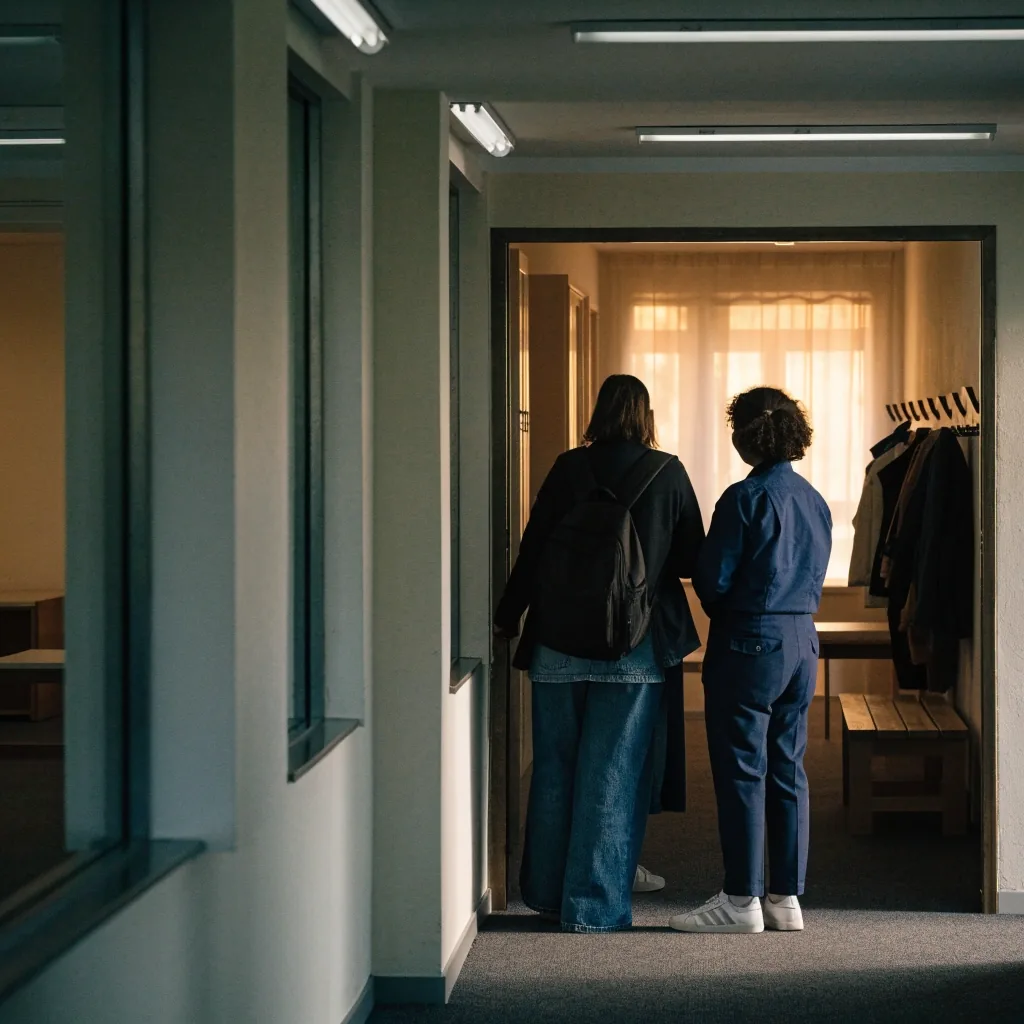
A first visit is where the questions on this page get answered properly. Ask to see the room your child would use.
A Kita can have space for a three-year-old and none for a one-year-old in the same month.
Why U3 and Ü3 places are counted separately
Who we are in this process
What PRI & PRI KITA does, and what the city does
Parents often ask us to reserve a place. We cannot, and it is worth understanding why — the split of responsibilities is what keeps the process fair for everyone on the list.
Management of the centres
As Träger we run the houses we manage: staffing, rota planning, budgets, quality development and the paperwork that keeps a Kita compliant. This is the part parents rarely see.
Care of the children
Day-to-day care, the settling-in period, meals, rest, play and how the team communicates with families — this is what your child experiences, and what you should look at closely on a visit.
Cooperation with the Jugendamt
We work with the Jugendamt on the rules that shape fees and occupancy. We follow the city's requirements; we do not set them.
Place allocation
Runs through the Kita-Navigator and each Kita's own offer process. We cannot reserve a place outside that system, whatever the timing.
What to prepare before you ask
Having these ready makes the conversation with a Kita or with us much shorter.
- Your child's date of birth, so the age band is clear from the start.
- The date you would like care to begin, and whether that date can move.
- Your Kita-Navigator registration, or the note that you have not registered yet.
- Your working hours, so the pickup window can be checked against them.
Still have a question we have not answered?
Write or call and describe your situation in your own words. If your question is about a specific child or a specific centre, we will connect you with the person who handles it.
Reach us directly
Phone
996513769Office
Vagedesstraße 19, 40479 Düsseldorf, Germany
Office hours
Monday to Friday, 7:30 AM – 5:00 PM